
Swiss UDI Mandate and Swissdamed: What Manufacturers Need to Know
Dr. Martin Walter
CEO & Managing Partner · 5 mars 2026 · 12 min read

Switzerland occupies a unique position in the European medical device landscape. As a non-EU member state that has historically aligned its regulatory framework with European standards, Switzerland has developed its own parallel system for medical device oversight that closely mirrors the EU Medical Device Regulation (MDR 2017/745) while maintaining distinct national requirements. The Swiss Medical Devices Ordinance (MedDO), which entered into force on 26 May 2021 in alignment with the EU MDR application date, governs the placing on the market and making available of medical devices in Switzerland. Swissmedic, the Swiss Agency for Therapeutic Products, serves as the competent authority responsible for market surveillance, vigilance, and the administration of the national medical device database known as swissdamed. For manufacturers who sell medical devices in the Swiss market, understanding the interplay between MedDO requirements, Swissdamed registration obligations, and the broader EU regulatory framework is essential. The Swiss UDI mandate, which becomes mandatory in mid-2026, introduces a new layer of compliance that demands careful planning, particularly for companies that must navigate both Swiss and EU requirements simultaneously. This guide provides a detailed overview of what manufacturers need to know about Swissdamed, the Swiss UDI mandate, the CH-REP requirement, and the practical steps required to achieve and maintain compliance in the Swiss market.
The relationship between Switzerland and the European Union regarding medical devices has been shaped by the Mutual Recognition Agreement (MRA), specifically Chapter 4 on medical devices. Under the original MRA, Swiss and EU conformity assessment procedures were mutually recognised, allowing medical devices certified in one jurisdiction to be placed on the market in the other without additional regulatory hurdles. This arrangement worked smoothly under the previous Medical Devices Directive (MDD 93/42/EEC). However, when the EU MDR entered into force on 26 May 2021, the MRA chapter on medical devices was not updated. The European Commission declined to update Chapter 4 due to unresolved institutional issues between Switzerland and the EU, effectively rendering the mutual recognition framework for medical devices inoperative. As a consequence, Switzerland has been treated as a third country by the EU with respect to medical devices since May 2021, and with respect to in vitro diagnostic medical devices since the EU IVDR application date in May 2022. This means Swiss manufacturers exporting to the EU must appoint an EU Authorised Representative, and EU manufacturers placing devices on the Swiss market must appoint a Swiss Authorised Representative (CH-REP). Negotiations between Switzerland and the EU resumed in March 2024, and bilateral discussions concluded by the end of that year. The resulting agreements are expected to be presented to the Swiss Parliament in the first quarter of 2026, with full ratification potentially extending into 2027, subject to a possible Swiss referendum. Until the MRA is restored, manufacturers must treat the Swiss and EU markets as separate regulatory jurisdictions, each with its own registration, representation, and compliance requirements.
The MedDO (Medizinprodukteverordnung, SR 812.213) is Switzerland's primary legislation governing medical devices. It was deliberately designed to maintain regulatory equivalence with the EU MDR, meaning that the substantive safety and performance requirements, classification rules, conformity assessment procedures, and post-market obligations are largely aligned with the European framework. This design principle reflects Switzerland's strategic interest in facilitating trade with the EU and ensuring that Swiss manufacturers can maintain access to the European market with minimal additional regulatory burden. Key provisions of the MedDO include requirements for conformity assessment by recognised conformity assessment bodies (the Swiss equivalent of EU Notified Bodies), General Safety and Performance Requirements that mirror those of EU MDR Annex I, obligations for post-market surveillance and vigilance reporting, UDI requirements aligned with the EU UDI framework, and the establishment of swissdamed as the national medical device database. The MedDO also established transitional provisions for legacy devices. Under Article 101 MedDO, devices that were lawfully placed on the Swiss market under the previous legislation may continue to be made available, subject to conditions similar to those in the EU's transitional provisions. The Swiss Federal Council has adopted mitigating measures to minimise the adverse effects of the lapsed MRA, with the aim of safeguarding the supply of safe medical devices in Switzerland while maintaining robust market surveillance. For manufacturers, the practical implication is that compliance with the EU MDR addresses the large majority of MedDO substantive requirements, but Swiss-specific procedural obligations, particularly around actor and device registration in swissdamed and the appointment of a CH-REP, remain separate and mandatory.
Swissdamed (Swiss Database on Medical Devices) is Swissmedic's official information system for the registration of economic operators and medical devices in Switzerland. It serves a function analogous to EUDAMED in the EU but operates as an independent, nationally administered database with no direct interface or data synchronisation with EUDAMED. Swissdamed has been developed in a modular fashion, with functionality being rolled out in phases. The Actors module, which allows economic operators to register and obtain a Swiss Single Registration Number (CHRN), went live on 6 August 2024 and is already mandatory. The UDI Devices module, which enables the registration of individual medical devices using their UDI-DI and Basic UDI-DI data, became available for voluntary submissions in August 2025. Mandatory device registration will commence on 1 July 2026. For reasons of regulatory equivalence, Swissmedic has deliberately aligned the design and data model of swissdamed with EUDAMED. The data elements required for device registration, including Basic UDI-DI and UDI-DI information, are largely the same as those required in EUDAMED. This alignment means that manufacturers who have already prepared their device data for EUDAMED can largely transfer that data to swissdamed. However, it is critical to understand that despite this design alignment, swissdamed and EUDAMED are entirely separate systems with no automated data exchange. Swissmedic cannot import or synchronise data from EUDAMED, and registration in one system does not satisfy the obligations in the other. Manufacturers active in both the EU and Swiss markets must register their devices in both databases independently.
While swissdamed and EUDAMED share a common conceptual foundation and many of the same data elements, there are meaningful differences that manufacturers must understand to avoid compliance gaps. First, the scope of modules differs. EUDAMED encompasses six modules covering actor registration, UDI and device registration, notified body and certificate data, clinical investigations, vigilance, and market surveillance. Swissdamed currently focuses on two core modules: the Actors module and the UDI Devices module. Additional modules for vigilance data and market surveillance information may be developed in the future, but swissdamed does not currently replicate the full breadth of EUDAMED's planned functionality. Second, certain EU-specific data elements do not appear in swissdamed. For example, data fields relating to market status in individual EU member states, EU Notified Body identification numbers, and EU-specific certificate references are not required in the Swiss system. Conversely, swissdamed includes Swiss-specific fields such as the CHRN (CH Registration Number) and information about the Swiss Authorised Representative. Third, the registration methods differ in their availability and timeline. From the end of March 2026, swissdamed will support three registration methods: an online editor for manual data input, XML upload in EUDAMED GET DEVICE or POST DEVICE format, and a machine-to-machine REST API using JSON format. The XML upload capability is particularly significant because it allows manufacturers to export their device data from EUDAMED in a compatible format and upload it to swissdamed, substantially reducing the effort required for dual registration. Fourth, the fee structures are different. As of July 2026, Swissmedic will charge a registration fee of CHF 300 per device notification in swissdamed. EUDAMED registration in the EU does not currently carry a per-device fee, though individual member states may have their own fee schedules. Manufacturers should factor the Swiss registration fees into their compliance budgets, particularly if they have large device portfolios.
Before any device can be registered in swissdamed, the responsible economic operator must complete actor registration in the Actors module and obtain a CHRN (CH Registration Number). The CHRN is Switzerland's equivalent of the SRN (Single Registration Number) used in EUDAMED, but the two numbers are not interchangeable. An SRN issued by an EU member state authority does not replace the CHRN, and vice versa. Manufacturers active in both jurisdictions will hold both an SRN and a CHRN. Actor registration in swissdamed is mandatory for Swiss manufacturers, Swiss authorised representatives (CH-REPs) appointed by foreign manufacturers, importers who place devices on the Swiss market, and producers of systems and procedure packs. The registration process requires submission of basic organisational information including the legal name, address, and contact details of the economic operator, along with evidence of domicile in Switzerland, typically an extract from the commercial register (Handelsregisterauszug) or a certificate of residence. Swissmedic has a statutory processing period of up to 30 days for CHRN applications, though in practice, applications are processed more quickly when submission volumes are low. It is important to note that foreign manufacturers who are not domiciled in Switzerland cannot register directly in swissdamed. They must appoint a Swiss Authorised Representative (CH-REP) who registers on their behalf. The CH-REP then manages the device registration process in swissdamed and serves as the local regulatory contact point for Swissmedic. Manufacturers should ensure that their CH-REP has the technical competence and organisational capacity to manage swissdamed registrations, vigilance reporting, and ongoing data maintenance on their behalf.
The Swiss UDI mandate follows a phased implementation approach that broadly mirrors the EU timeline while maintaining its own specific dates. Under the MedDO, manufacturers must assign a UDI to their devices using an internationally recognised issuing entity (GS1, HIBCC, ICCBBA, or INFORMATICS), ensure the UDI carrier is placed on the device label and all higher levels of packaging (excluding shipping containers), and register the UDI data in swissdamed. The critical dates are as follows: Since 6 August 2024, actor registration in swissdamed has been mandatory. From August 2025, device registration in the UDI Devices module has been available on a voluntary basis. On 1 July 2026, device registration becomes mandatory for all devices, systems, and procedure packs placed on the Swiss market. A transition period extends until 31 December 2026, during which manufacturers must complete the registration of their existing device portfolios. However, there is an important exception: devices that are subject to a reporting obligation for serious incidents, field safety corrective actions (FSCAs), or trend reporting have no transitional period and must be registered from 1 July 2026 onward. This exception is significant because it means that any device involved in a vigilance event must already be registered in swissdamed at the time the report is filed. Manufacturers should prioritise the registration of higher-risk devices and devices with a history of vigilance events to ensure they can meet this requirement. The registration obligation applies equally to devices under the current MedDO and IvDO (In Vitro Diagnostic Devices Ordinance) legislation and to legacy devices that continue to be placed on the market under the transitional provisions of Article 101 MedDO and Article 82 IvDO.
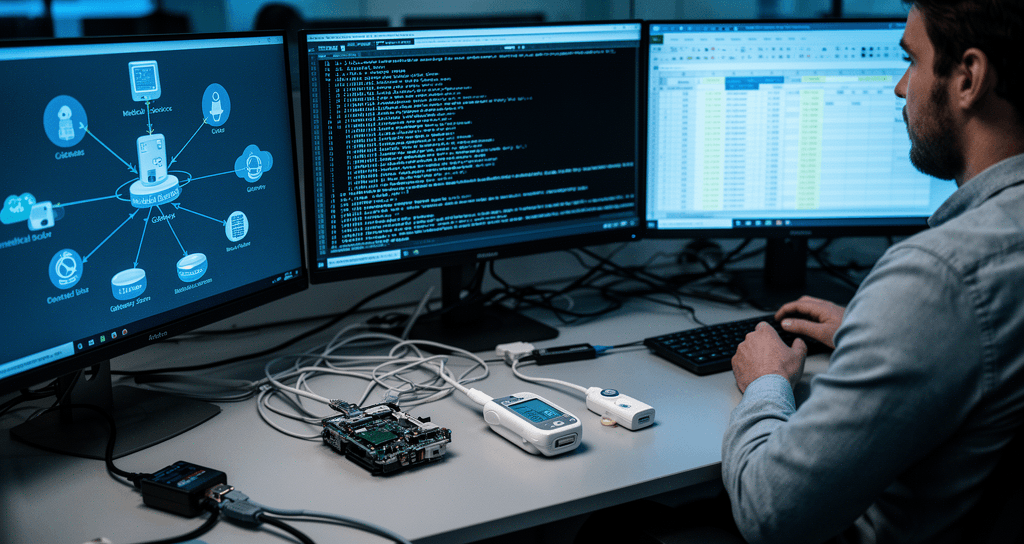
Device registration in swissdamed requires manufacturers to submit a comprehensive set of data elements for each device, organised around the Basic UDI-DI and UDI-DI identifiers. The Basic UDI-DI is the primary identifier for a device model and serves as the key to link all device information, regulatory documentation, and certificates. The UDI-DI identifies the specific version or variant of the device and appears on the device label as part of the UDI carrier (barcode or RFID). The data elements required for registration include the device trade name and model, manufacturer information (linked to the CHRN), device classification and risk class, applicable regulation (MedDO or IvDO), the intended purpose of the device, whether the device contains or incorporates a medicinal substance, animal or human tissue, or a material with biological origin, relevant product codes (EMDN nomenclature), the UDI-DI and Basic UDI-DI issued by a recognised issuing entity, and information about the device's availability on the Swiss market. As previously noted, the data model is largely aligned with EUDAMED, meaning that manufacturers who have already prepared their EUDAMED submissions can reuse much of the same data. The XML upload functionality, which accepts files in EUDAMED GET DEVICE or POST DEVICE format, is designed precisely for this purpose. However, manufacturers must verify that their XML files do not contain EU-specific data elements that are not applicable in the Swiss context, and that all Swiss-specific fields are properly populated. For manufacturers with large device portfolios, the machine-to-machine REST API interface offers the most efficient approach to registration, enabling automated data submission and ongoing data maintenance through integration with existing UDI management systems or product information management (PIM) platforms.
The requirement to appoint a Swiss Authorised Representative (CH-REP) is one of the most significant practical implications of the lapsed MRA between Switzerland and the EU. Under Article 51 MedDO, manufacturers who are not domiciled in Switzerland and who place devices on the Swiss market must appoint a CH-REP with a registered domicile in Switzerland. This requirement applies to all EU manufacturers, as well as manufacturers from any other country outside Switzerland. The CH-REP assumes substantial regulatory responsibilities on behalf of the foreign manufacturer. These include registering as an economic operator in swissdamed and obtaining a CHRN, managing device registration in the UDI Devices module on behalf of the manufacturer, serving as the point of contact for Swissmedic for market surveillance inquiries, reporting serious incidents and field safety corrective actions (FSCAs) to Swissmedic for devices available on the Swiss or Liechtenstein market, ensuring that the manufacturer's declaration of conformity and technical documentation are available for inspection, and verifying that the devices are properly labelled, including the CH-REP's name and address on the labelling. The last point is particularly important from a labelling perspective. The CH-REP's name and registered address must appear on the device labelling or in the instructions for use when the manufacturer is not domiciled in Switzerland. This requirement may necessitate labelling changes for manufacturers who previously sold into Switzerland under the MRA without a Swiss representative. The choice of CH-REP is a strategic decision. Manufacturers should select a representative with demonstrated expertise in Swiss medical device regulation, established relationships with Swissmedic, the technical capacity to manage swissdamed registrations and vigilance reporting, and the organisational infrastructure to serve as a reliable local presence in Switzerland.
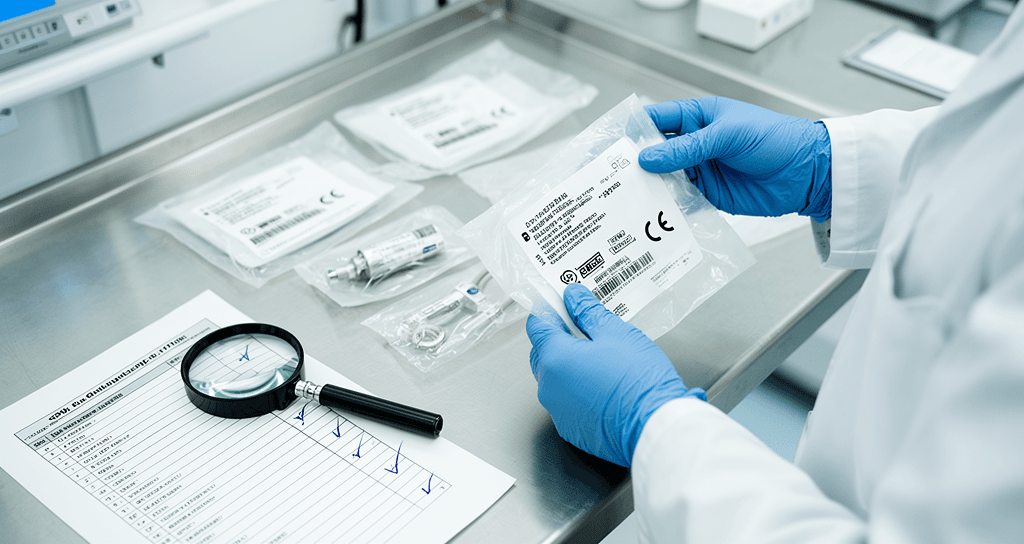
The Swiss labelling requirements for medical devices are set out in the MedDO and are largely aligned with those of the EU MDR (Annex I, Chapter III). However, there are several Switzerland-specific considerations that manufacturers must address. The most prominent is the requirement to include the CH-REP's information on the labelling when the manufacturer is not domiciled in Switzerland. Unlike the EU, where the Authorised Representative's details are required under Article 11(3) MDR, the Swiss requirement is governed by MedDO Article 51 and references the CH-REP specifically. Manufacturers must ensure that the CH-REP information is presented in the correct format and appears in a location that does not obscure other mandatory labelling elements. Language requirements are another important consideration. While the MedDO does not mandate a specific language for device labelling in general, the instructions for use and safety-relevant information must be provided in the official languages of the region where the device is made available. Switzerland has four official languages: German, French, Italian, and Romansh. In practice, labelling for the Swiss market is typically provided in German, French, and Italian at minimum. Manufacturers should also note that the UDI carrier (a barcode or RFID tag encoding the UDI-DI and, where applicable, the UDI-PI) must appear on the device label and all higher levels of packaging, consistent with the UDI requirements under both MedDO and the EU MDR. The UDI must be machine-readable (barcode or RFID) and, for certain device types, also human-readable. For reusable devices that undergo reprocessing, direct marking of the UDI on the device itself is required. Manufacturers should conduct a comprehensive labelling review to identify any gaps between their current EU MDR-compliant labels and the additional Swiss requirements, particularly regarding CH-REP information, language coverage, and any Swiss-specific symbols or markings.
Swissmedic operates an independent market surveillance and vigilance system for medical devices placed on the Swiss market. While the substantive requirements for vigilance reporting under the MedDO are aligned with those of the EU MDR, the procedural obligations are directed to Swissmedic rather than to an EU member state competent authority. Manufacturers or their CH-REPs must report serious incidents that occur in Switzerland or Liechtenstein directly to Swissmedic at the designated materiovigilance contact. The reporting timelines follow the established framework: two days for serious public health threats, ten days for death or unanticipated serious deterioration, and fifteen days for other serious incidents. Field safety corrective actions (FSCAs) involving devices available on the Swiss or Liechtenstein market must also be notified to Swissmedic without delay, using the official FSCA form. An important connection to swissdamed registration is that devices subject to a vigilance reporting obligation must be registered in swissdamed from 1 July 2026 onward, with no transitional period. This means that if a serious incident or FSCA occurs involving a device that is not yet registered in swissdamed, the manufacturer or CH-REP must immediately register the device in addition to filing the vigilance report. This creates an urgent compliance imperative for manufacturers to prioritise the registration of devices that have a higher likelihood of vigilance events. It is also worth noting that because the MRA on medical devices has not been updated, there is no formal mechanism for sharing vigilance data between Swissmedic and EU member state authorities through EUDAMED. Manufacturers must therefore submit vigilance reports independently to both Swissmedic and the relevant EU competent authorities where applicable, which increases the administrative burden but is a necessary consequence of the current regulatory landscape.
Manufacturers who place medical devices on both the EU and Swiss markets face the challenge of maintaining parallel registrations in two separate databases with no automated data exchange. While the alignment between swissdamed and EUDAMED in terms of data elements is helpful, the lack of an interface between the systems means that any updates, corrections, or new registrations must be performed independently in each system. This dual registration requirement has several practical implications. First, data consistency becomes a significant quality concern. Manufacturers must implement processes to ensure that device data in swissdamed and EUDAMED remain synchronised. Any change to a device's Basic UDI-DI data, such as a change in intended purpose or classification, must be reflected in both systems. Discrepancies between the two databases could trigger regulatory inquiries and undermine the manufacturer's credibility with both Swissmedic and EU competent authorities. Second, the administrative burden is compounded by the need to manage two sets of actor registrations (SRN in EUDAMED and CHRN in swissdamed), maintain two authorised representative relationships (EU AR and CH-REP) where the manufacturer is based outside both jurisdictions, and track two sets of registration fees and renewal requirements. Third, the timeline differences add complexity. The EU mandates EUDAMED device registration from 28 May 2026, while Switzerland mandates swissdamed registration from 1 July 2026. While the dates are close, they are not identical, and manufacturers must plan their registration activities to meet both deadlines. The XML upload functionality in swissdamed, which accepts EUDAMED-format files, is the most practical tool for managing dual registration. Manufacturers should establish a workflow in which device data is first prepared and validated for EUDAMED, then exported in XML format and uploaded to swissdamed with Swiss-specific adjustments. This approach minimises duplication of effort while ensuring that both systems contain accurate, up-to-date information.
In our work with medical device manufacturers navigating the Swiss regulatory landscape, several questions arise with particular frequency. The first is whether registration in EUDAMED satisfies the Swiss requirement. The answer is unequivocally no. Swissdamed and EUDAMED are independent systems, and registration in one does not fulfil the obligation in the other. Manufacturers must register in both systems if they sell in both markets. The second common question concerns legacy devices. Manufacturers frequently ask whether devices placed on the Swiss market under the old legislation need to be registered in swissdamed. Yes, they do. The registration obligation applies to both current-legislation devices (under MedDO and IvDO) and legacy devices that continue to be placed on the market under the transitional provisions. The third question relates to the role of the importer versus the CH-REP. Under the MedDO, the importer is the economic operator who places a device from a third country on the Swiss market. The CH-REP is the designated representative of the foreign manufacturer. In some cases, the same entity may serve both roles, but the legal obligations differ. The CH-REP is specifically mandated to act on behalf of the manufacturer for regulatory purposes, including swissdamed registration and vigilance reporting. The fourth question involves timing: when should manufacturers start preparing? The answer is now. Actor registration has been mandatory since August 2024, voluntary device registration has been available since August 2025, and mandatory registration begins on 1 July 2026. Manufacturers who wait until the mandatory date to begin their registration activities risk being unable to complete the process within the transition period, particularly if they have large device portfolios or encounter data quality issues during the registration process.
Preparing for compliance with the Swiss UDI mandate and swissdamed registration requires a structured approach that begins with an assessment of your current regulatory position and ends with ongoing data maintenance. The following steps provide a practical roadmap. Step one: verify your actor registration status. If you are a Swiss manufacturer, confirm that you have registered in the swissdamed Actors module and hold a valid CHRN. If you are a foreign manufacturer, confirm that your CH-REP has registered and obtained a CHRN on your behalf. If you have not yet appointed a CH-REP, this should be your immediate priority, as the CH-REP must be in place before any device registration can proceed. Step two: audit your UDI data. Review your device portfolio and ensure that every device has been assigned a valid UDI by a recognised issuing entity. Verify that your Basic UDI-DI and UDI-DI data are accurate, complete, and consistent with your EUDAMED submissions if applicable. Pay particular attention to devices that have undergone changes since their initial UDI assignment, as data currency is a common compliance gap. Step three: prepare your registration data. Compile the required data elements for each device, using the swissdamed data model as your reference. If you are already registered in EUDAMED, export your device data in XML format and review it for Swiss-specific adjustments. Step four: prioritise your registration sequence. Begin with higher-risk devices (Class III, Class IIb implantables) and any devices with a history of vigilance events, as these must be registered without a transitional period from 1 July 2026. Step five: conduct a labelling review. Verify that your device labels include the CH-REP information (if applicable), that the UDI carrier is present on all required packaging levels, and that language requirements are met for the Swiss market. Step six: establish ongoing maintenance processes. Swissdamed registration is not a one-time activity. Manufacturers must update their device data when changes occur, manage annual registration renewals, and ensure that new devices are registered before being placed on the Swiss market.
Navigating the Swiss regulatory landscape presents unique challenges that are best addressed with local expertise and direct understanding of Swissmedic's expectations. Swiss MPC is headquartered in Cham, Switzerland, in the Canton of Zug, giving our consultants direct proximity to the Swiss regulatory environment and first-hand experience with the practical realities of MedDO compliance, swissdamed registration, and Swissmedic interactions. Our team has guided numerous manufacturers through the complete lifecycle of Swiss market access, from initial regulatory strategy and CH-REP selection to actor registration, UDI data preparation, swissdamed device registration, and ongoing post-market compliance. We understand the nuances that distinguish Swiss requirements from EU MDR obligations, and we help manufacturers implement efficient workflows that address both jurisdictions without unnecessary duplication of effort. Whether you are a Swiss manufacturer preparing for the mandatory swissdamed registration deadline, an EU manufacturer who needs to establish a CH-REP and navigate the consequences of the lapsed MRA, or a non-European manufacturer seeking to enter the Swiss market for the first time, Swiss MPC provides the regulatory expertise and local presence needed to achieve compliance efficiently and sustainably. We offer comprehensive support for UDI strategy and data management (UDI Beratung Schweiz), swissdamed actor and device registration, CH-REP selection and coordination, labelling review and adaptation for the Swiss market, vigilance and post-market surveillance setup, and dual registration workflow optimisation for EU and Swiss markets. Contact us to discuss your Swiss regulatory requirements and learn how our Cham-based team can support your path to compliance.
Dr. Martin Walter
CEO & Managing Partner
Rédigé par Dr. Martin Walter chez Swiss MPC.
Découvrez nos services
Articles associés







Prêt à accélérer votre conformité réglementaire ?
Planifiez une consultation gratuite avec nos experts réglementaires seniors
Réponse généralement sous 24 heures